Best Water Softener for Well Water
The best water softener for well water is the Kenmore 420, because its listing states limits for both very hard water and clear-water iron and it ships with a sediment pre-filter. A water softener for well water has to cope with three things a city softener rarely sees: high hardness, dissolved iron and grit from the pump. Well water softener systems that ignore any of the three foul or clog early. This page is the well-water branch of our best water softener rankings.
As an Amazon Associate I earn from qualifying purchases.
Our best well water softener system picks, ranked:
| # | Pick | Best for | Grains | Iron | Buy |
|---|---|---|---|---|---|
| 1 | Kenmore 420 | Best for well water | 40,000 grains* | 10 (clear-water)* | Check price$600–$900 |
| 2 | EcoPure EP42 | Best for iron | 42,200 grains (at max salt dose) | 11 (clear-water) | Check price$900–$1,300 |
| 3 | Aquasure Harmony 50K Fine Mesh | Best value for iron | 50,000 grains* | 10 ppm* | Check price$600–$900 |
| 4 | DuraWater Fleck 5600SXT Iron Blaster 48K | Best Fleck for wells | 48,000 grains* | not stated | Check price$600–$900 |
| 5 | PRO+AQUA 80K | Best for large homes | 80,000 grains* | 2 (clear-water)* | Check price$900–$1,300 |
What a water softener system for well water needs
Get a full well test before you buy: hardness, iron (and whether it is clear or red), manganese, pH and sulfur. A water softener system for well water should state an iron limit, survive sediment and handle hardness well above city levels. Well water often runs 15–30 gpg, against 5–10 gpg for many city supplies, so capacity matters more here. A sediment screen or spin-down filter ahead of the softener stops sand from scoring the valve: any softener for well water lasts longer with one (see pre-filter picks).
Manganese and tannins
Manganese behaves like iron in a softener: small amounts exchange, larger amounts coat the resin and leave black or brown stains. Tannins are organic and need a dedicated tannin system with anion resin; a standard softener won't remove them and they shorten its resin life.
Shallow vs deep well differences
A water softener for well use doesn't care about depth directly, but shallow wells are more likely to carry surface contaminants and bacteria, which a softener does not treat. Deep wells more often carry dissolved iron and higher hardness. Test either way.
Pressure tank and pump flow (well system sizing)
Install the softener after the pressure tank. Check that your pump's flow can backwash the resin tank: a 10 x 54 in tank usually needs around 2.5–3.5 gpm for backwash, so a weak pump is a reason to choose a cabinet unit over a large two-tank system. This is the part of a water softener for well system design people skip.
What to test on a private well, and where
Hardware-store strips cover hardness and sometimes iron, which is enough to size a softener on a clean well. If you see stains, smell sulfur or have never tested, use a state-certified lab: your state health department or county extension office lists them, and many offer a homeowner package. The U.S. EPA doesn't regulate private wells, so testing is up to you; it recommends testing at least once a year for bacteria, nitrates and anything of local concern. For a softener decision, ask for:
| Test | Why it matters |
|---|---|
| Total hardness (gpg or mg/L) | Sets the grain capacity you need |
| Iron, ferrous and ferric | Clear (ferrous) iron can go through a softener up to its stated limit; red (ferric) iron needs a filter first |
| Manganese | Fouls resin like iron and leaves black stains; counts toward compensated hardness |
| pH | Low pH water (under about 6.5) corrodes pipes and may need a neutraliser before the softener |
| Hydrogen sulfide | Rotten-egg smell; a softener won't remove it |
| Tannins | Tea-coloured water from decaying plant matter; needs special anion resin |
| Bacteria (total coliform, E. coli) | A safety issue, not a softening one; needs disinfection such as UV |
The right treatment order on a well
- Pressure tank
- Sediment filter or spin-down screen
- Iron, manganese or sulfur filter (only if the test calls for it)
- Water softener
- UV disinfection (if bacteria are a concern; UV works best on softened, iron-free water)
- Water heater and the rest of the house
Put a softener before an iron filter and the resin fouls; put UV before the softener and minerals coat the lamp sleeve.
The ranked list
Our top rated water softeners for well water, in order. We rate on published iron and hardness limits, not star ratings, so check each limit against your lab report.
- 1
Kenmore 420
Best for well water · by Kenmore
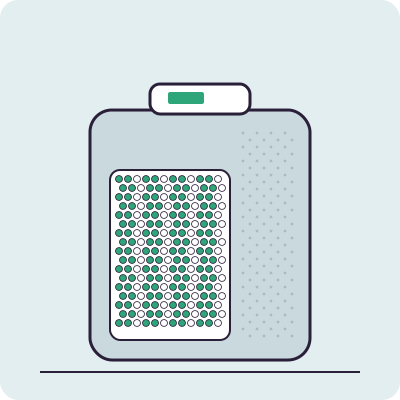
Why it's here: Stated limits for very hard water and iron, plus a sediment pre-filter. A 40,000-grain cabinet softener listed for very hard water and clear-water iron, with a sediment pre-filter for well water.
Grain capacity 40,000 grains* Max flow rate 7.7 gpm* Clear-water iron 10 (clear-water)* Max hardness 120 gpg* Warranty 1 yr full, 3 yr electronics, 10 yr tank* * From the seller's Amazon listing; not yet confirmed by the manufacturer.
Certification claims are shown only once the manufacturer's documentation confirms them.
Good
- Listed for very high hardness and clear-water iron
- Sediment pre-filter built for wells
- Silent in normal use with easy controls, in our install
Not so good
- Lower flow than the full-size two-tank systems
- 1-year full warranty
- Supplied drain hose was too short for our install; manual is QR-code only
Skip it if: Wells with red (oxidised) iron, iron bacteria or sulfur smell: you need an iron filter first.
- 2
EcoPure EP42
Best for iron
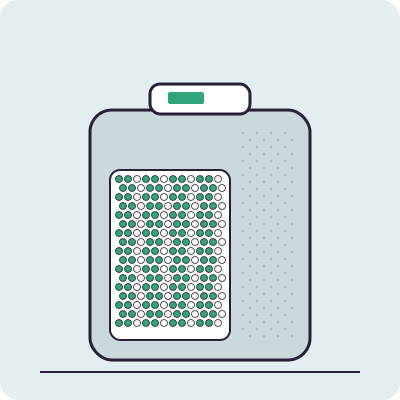
Why it's here: Highest stated iron limit. A 42,000-grain cabinet softener with the highest stated clear-water iron limit of the picks.
Grain capacity 42,200 grains (at max salt dose) Max flow rate 8.2 gpm Clear-water iron 11 (clear-water) Max hardness 110 gpg Warranty 1 yr full, 3 yr electronics, 10 yr tank* * From the seller's Amazon listing; not yet confirmed by the manufacturer.
Certification claims are shown only once the manufacturer's documentation confirms them.
Good
- Highest listed iron limit among our softeners
- Auto-calculates salt and water per regeneration
- Listed for city and well water
Not so good
- Top price band for its size
- NSF standard not named on the listing
- Warranty extension requires using EcoPure's cleaner
Skip it if: City water: you'd pay for iron capacity you don't need.
- 3
Aquasure Harmony 50K Fine Mesh
Best value for iron · by Aquasure
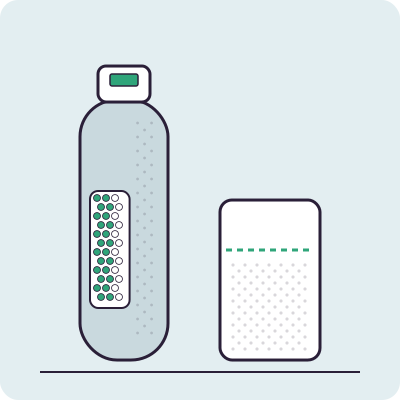
Why it's here: Fine-mesh resin and pre-filter at a mid price. Aquasure's fine-mesh resin version of the Harmony, listed for iron, with a triple-purpose pre-filter.
Grain capacity 50,000 grains* Clear-water iron 10 ppm* Sized for 3-4 bathrooms* * From the seller's Amazon listing; not yet confirmed by the manufacturer.
Good
- Fine-mesh resin suited to iron
- Pre-filter included
- Mid price band
Not so good
- Own-brand control head
- No certification named
- Max TDS listed at 500 ppm
Skip it if: Wells with ferric iron or iron bacteria.
- 4
DuraWater Fleck 5600SXT Iron Blaster 48K
Best Fleck for wells · by DuraWater (Fleck valve)
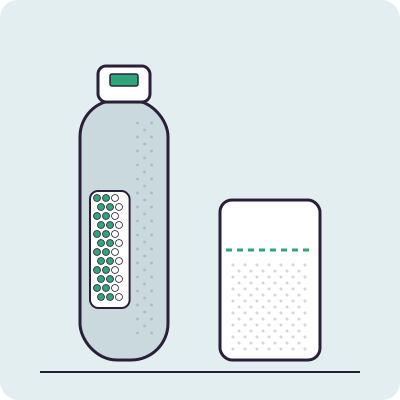
Why it's here: Fleck valve with fine-mesh resin; no iron limit stated. A Fleck 5600SXT system loaded with fine-mesh resin for well water, with a large separate brine tank.
Grain capacity 48,000 grains* Warranty 60 months* * From the seller's Amazon listing; not yet confirmed by the manufacturer.
Good
- Fleck 5600SXT valve
- Fine-mesh resin for wells
- Large 14 x 36 in brine tank
Not so good
- The listing gives no iron limit
- Two-tank footprint
- No pre-filter included
Skip it if: Anyone who needs a stated iron limit to size against.
- 5
PRO+AQUA 80K
Best for large homes
Why it's here: Big wells and big families; low iron limit. An 80,000-grain heavy-duty softener for 6–8 people, with modest clear-water iron reduction for well users.
Grain capacity 80,000 grains* Clear-water iron 2 (clear-water)* Sized for 6-8 people, up to 6 bathrooms* Warranty Not confirmed — the listing contradicts itself: 5 years (listing bullet) / 1 yr std, 3 yr registered (spec table) - CONFLICT * From the seller's Amazon listing; not yet confirmed by the manufacturer.
Good
- Largest capacity on the list
- Listed for city and well water
- Digital valve calculates salt and water use
Not so good
- Warranty terms conflict on the listing (see specs)
- Iron reduction is low compared with the fine-mesh units
- Low stock at research time
Skip it if: Small homes: an oversized softener regenerates too rarely and wastes nothing but money.
Best water softener for well water with iron
The best water softener for well water with iron is the one whose maker states an iron limit above your test result; that's also the best water softener for iron removal, up to that limit. Of our picks, the EcoPure EP42 states 11 (clear-water), the highest we found. The table lists every softener with a stated limit.
| Softener | Iron limit | Grains |
|---|---|---|
| EcoPure EP42 | 11 (clear-water) | 42,200 grains (at max salt dose) |
| Kenmore 420 | 10 (clear-water)* | 40,000 grains* |
| Aquasure Harmony 50K Fine Mesh | 10 ppm* | 50,000 grains* |
| PRO+AQUA 80K | 2 (clear-water)* | 80,000 grains* |
How much iron can a water softener for well water with iron remove?
Softener resin can exchange dissolved (ferrous, "clear-water") iron, usually up to the single-digit to low double-digit ppm figures above. It can't handle red (ferric) iron that has already oxidised into particles, iron bacteria (slimy orange deposits) or iron bound up with tannins; those foul the resin. Above roughly 10 ppm, or with any of those signs, put a dedicated iron filter ahead of the softener and clean the resin regularly with an iron-removing softener cleaner.
Very hard well water (over 20 gpg)
A water softener for hard well water needs capacity first. At 25 gpg, a family of four uses about 7,500 grains a day, so a 48,000-grain unit would regenerate every five days. Run the numbers below; if you land above 64,000 grains, look at the PRO+AQUA 80K or a twin-tank system like the AFWFilters Fleck 9100SXT Twin 48K. Salt-free conditioners usually list a 15 gpg ceiling, so they are rarely the answer on wells (compare in salt-free vs salt water softeners).
Water softener size calculator
How to read this: we multiply daily water use by your hardness (plus iron), then by the days between regenerations, and add 25% headroom.
4 people × 75 gal × 12 gpg = 3,600 grains a day. Over 7 days with headroom you need about 31,500 grains, so look for a 32,000-grain softener.
Ranked picks with enough capacity: Kenmore 350 (32,000), Aquasure Harmony Lite 34K (34,000), GE Smart Water Softener 35K (35,000), Aquasana SimplySoft 40K (40,000).
Assumptions: 75 gallons per person per day; each ppm of clear-water iron counts as 4 gpg of hardness.
These are the water softener systems for well water we'd shortlist; sort them against everything else in the comparison table.
Questions people ask
- What is the best water softener for well water?
- The Kenmore 420: its listing states limits for very hard water and clear-water iron, and it ships with a sediment pre-filter.
- What is the best water softener for well water with iron?
- The EcoPure EP42, whose maker rates it for up to 11 ppm of clear-water iron. Above that, or with red iron, add an iron filter first.
- What's the best type of water softener for well water?
- A salt-based ion-exchange softener with a stated clear-water iron limit above your test result and a sediment pre-filter. Salt-free conditioners usually need iron below 0.3 ppm, which rules out many wells.
- Do I need a water softener with well water?
- Only if your well tests hard. Many wells run 10–30 gpg, so most do, but test first: a softener does nothing for bacteria, nitrates or sulfur.
- What size water softener do I need for well water?
- People × 75 gallons × (hardness in gpg + about 4 per ppm of iron) × 7 days, plus 25% headroom. A family of four on 20 gpg with 2 ppm iron needs roughly 73,500 grains, so an 80,000-grain or twin-tank system.
- How much does it cost to put a water softener on a well?
- The softeners on this page sit in the $600–$900 and $900–$1,300 bands. Add a sediment filter, and an iron filter if your test calls for one, plus installation if you don't do it yourself.
- Is it OK to drink softened well water?
- Softening adds a little sodium (about 8 mg per litre per gpg removed) but doesn't make unsafe water safe. Test the well for bacteria and nitrates separately.
- Do I need a special water softener for well water?
- You need one that states an iron limit above your test result, has enough capacity for your hardness, and a sediment pre-filter. Many standard softeners work on wells if those boxes are ticked.
- Will a water softener remove the rotten-egg smell?
- No. Sulfur (hydrogen sulfide) needs an oxidising filter or aeration system; a softener doesn't treat it.
- Where does the softener go on a well system?
- After the pressure tank and any sediment or iron filter, before the water heater.